

A shop takes in a high-voltage EV (Electric Vehicle ) or Hybrid without the right equipment, and something goes wrong. Not always a shock, perhaps a near-miss: a technician reaching for a wrench, no insulating mat under his feet, no Class 0 gloves on his hands, working three inches from an orange cable carrying 400 volts.
EV registrations in the U.S. surpassed 4 million in 2024, and is now a well established market . If your shop is not seeing them regularly, you will be. The problem is most EV safety equipment checklists online either skim the surface or read like a compliance document from 1997.
This is neither. This is a complete, category-by-category breakdown of the EV safety equipment every auto repair shop needs built around real products, real standards, real safety and the dire loss of life that happens when they skip steps.
Why EV High-Voltage Systems Demand Different Safety Equipment
Standard shop Personal Protective Equipment (PPE) is not rated for what EVs carry. Many EVs operate between 400V and 800V, and some exceed these levels. Mishandling these systems can lead to electric shock, cardiac arrest, severe burns, and death. For comparison, a US household runs at 120V. The margin for error at 800V is absolutely ZERO.
Ordinary latex or neoprene shop gloves are NOT thick enough or rated to protect against a high-voltage shock. That single fact eliminates the “we’re covered” assumptions shops make when they first start taking in EVs.
The critical rule: every piece of safety equipment must be rated, tested, and appropriate for the specific voltage class you are working in. Rating labels and classes matter. “1000V rated” is not a suggestion – it is the minimum floor for working on most EVs today.
NFPA 70E, the National Fire Protection Association’s Standard for Electrical Safety in the Workplace, governs electrical PPE specifications for workplace environments. ASE’s xEV High-Voltage Electrical Safety Standards layer automotive-specific requirements on top of that. Both frameworks agree: the equipment categories below are non-negotiable.
Category 1: Personal Protective Equipment (PPE)
This is the first line of defense between your technician and a high-voltage shock. No other safety system substitutes for proper PPE worn correctly on the body.
Insulating Gloves – The Most Critical Item in the Shop
Class zero electrical insulating gloves rated for 1,000 volts are required for EV service. These gloves prevent high voltage from traveling through your hands, and you MUST test them before every use by blowing air in the glove, then checking for pinholes or any damage. If they are damaged in ANY WAY, do not use them!
JohnDow’s Insulating Gloves 11″ – Class 0 meet this standard. But just rubber gloves alone are not enough. True safety requires a full three-layer system:
- Undergloves – worn next to the skin to absorb moisture from your hands and maintain the insulating glove’s integrity
- Insulating Gloves (Class 0) – the primary voltage barrier, rated to 1,000V
- Overgloves – leather outer protection against cuts, punctures, and abrasion that could compromise the insulating layer underneath



All three layers work together. Skipping the overgloves means your insulating gloves are one graze against a sharp edge away from serious danger.
Glove storage and testing matter as much as the gloves themselves. JohnDow’s Pneumatic Glove Tester is the fastest, most reliable way to inflate and inspect gloves for pinholes before each use (a requirement under ASTM D120 standard). The Storage Case for Class 00-1 Gloves keeps gloves clean, dry, and away from UV exposure, which degrades rubber insulation.


You must test these gloves every six months under regular use. You can only use tested gloves within the previous 12 months. Keep a testing log. It is not bureaucracy; it’s safety. Sicame provides independent testing for PPE.
Arc Flash Protection
An arc flash from a high-voltage EV system releases energy equivalent to an explosion. The face and upper body are most exposed.
JohnDow’s Arc Flash Face Shield with Headband provides direct facial and neck coverage in the unlikely event of an arc flash. The Arc Flash Switching Jacket adds upper-body arc protection for any task requiring work directly adjacent to live or recently disconnected high-voltage systems.


Pair these with the Elastomer Insulating Apron – Class 0 for torso coverage during battery-adjacent work, and the Insulating Overboots – Class 1 to break the electrical path from the vehicle to the ground through your technician’s feet.

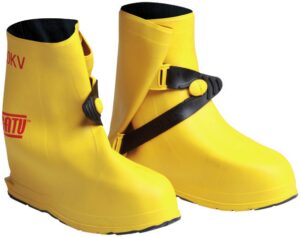
For shops doing volume EV work, JohnDow also offers Safety Shoes with Insulating Sole as a permanent footwear solution rather than overboots applied situationally.

Category 2: High-Voltage Workspace Protection
Personal protection covers your technician’s body. Workspace protection controls the environment they are working in – and protects everyone else in the shop.
Insulating Mats, Blankets, and Caps
The Insulating Mat – Class 0 is placed on the floor directly under the technician’s working area. It breaks the electrical path to ground through the floor. This is critical in metal-floored shops or whenever a technician is near exposed high-voltage components.

JohnDow’s Clear Insulating Blanket – Class 0 and Orange Insulating Blanket – Class 0 are used to cover adjacent components, exposed cables, or the vehicle itself during partial-system work. The clear variant allows visual monitoring of the covered area without removing the blanket; the orange variant provides maximum visibility as a “do not touch” signal to anyone passing through the work area.


The Insulating Cap – Class 0 covers live or recently de-energized individual terminals, battery connectors, or cable ends. It is the surgical-level piece of this category – precise, small, and easily overlooked. Do not overlook it.

Insulated Tools
Insulated tools are hand tools which prevent accidental electrical contact. Standard chrome-vanadium tools are conductive. In a high-voltage environment, touching the wrong surface with an uninsulated wrench is not a mistake you get to make twice if you’re lucky.
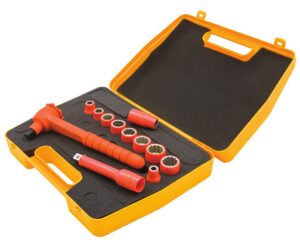
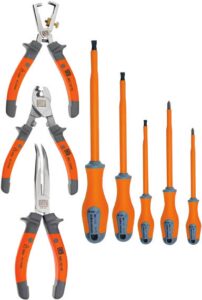
JohnDow’s Insulated Socket Wrench Set 3/8″ and 8 Bi-Material Insulated Tools Kit are both rated for 1,000V. The bi-material kit covers the hand tools technicians reach for most often – screwdrivers, pliers, cutters – all with insulated handles designed to IEC 60900 standards.
Replace standard shop tools with insulated equivalents for any cart or station designated for EV high-voltage work. Cross-contamination between EV and Internal Combustion Engine (ICE) tool sets creates the exact scenario these tools are designed to prevent.
Category 3: Lockout/Tagout and Vehicle Control
Before servicing any high-voltage components, technicians must fully disable and discharge the system. Lockout/tagout (LOTO) procedures ensure a disabled high-voltage system cannot inadvertently re-energize while a technician is working.
Locking Steering Wheel Cover and Safety Padlock
JohnDow’s Locking Steering Wheel Cover prevents anyone from starting the vehicle while EV service is in progress. This matters because many EVs will re-engage certain high-voltage circuits the moment they detect a key fob in range or a driver seated at the wheel.
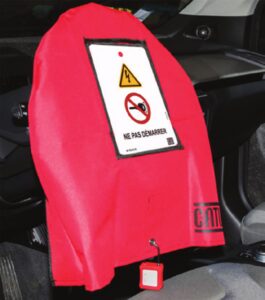
The Nylon Safety Padlock locks out the high-voltage service disconnect once removed. Nylon construction is deliberate; metal padlocks themselves can become a conductor or short a circuit if dropped in the wrong place.
Insulating Clamps provide additional securing of disconnected cables and components, holding them physically away from reconnection points during service.
These LOTO tools are the difference between a de-energized vehicle that stays de-energized and one that re-energizes because someone grabbed the wrong key.
Category 4: Shop Safety and Emergency Response
Even with perfect PPE and flawless procedure, shops need area-level safety equipment. This category covers what happens when something goes wrong before it becomes catastrophic.
The Rescue Stick
It is required to have a safety hook, also called a rescue hook, so in the event a technician comes into contact with high voltage, another technician is able to use the hook to physically pull them away from the vehicle. For this reason, it’s smart to have two people present anytime a technician is working on an EV’s high-voltage system.
JohnDow’s Rescue Stick is specifically for this. It is non-conductive, long enough to allow safe retrieval distance, and immediately accessible when mounted near the EV service bay. Every shop doing high-voltage EV work should have one visible and reachable, not locked in a cabinet.
Vehicle Fire Blanket
EV battery fires are chemically different from ICE fires. Lithium-ion batteries damaged during collisions can experience thermal runaway, a chain reaction where overheating in one battery cell spreads to adjacent cells, causing a fire that can reignite days after extinguishing. Standard fire suppression systems are not designed for these chemical fires and water and/or standard fire extinguishers will not put out an EV fire.
JohnDow’s Vehicle Fire Blanket is designed to contain an EV battery fire, suppress oxygen flow to the thermal runaway event, and buy time for emergency response. It does not extinguish a fire; it gives you time for first responders to arrive to remove the vehicle and keep the fire from spreading to the rest of the shop and save lives.

Area Marking and Barricades
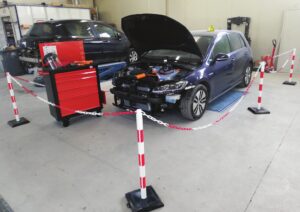
To minimize danger, establish a 3-foot safety barrier around the vehicle. This zone serves as a visual and physical reminder of electrical hazards. Only trained personnel equipped with proper EV maintenance safety equipment should enter this area.
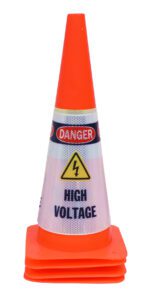
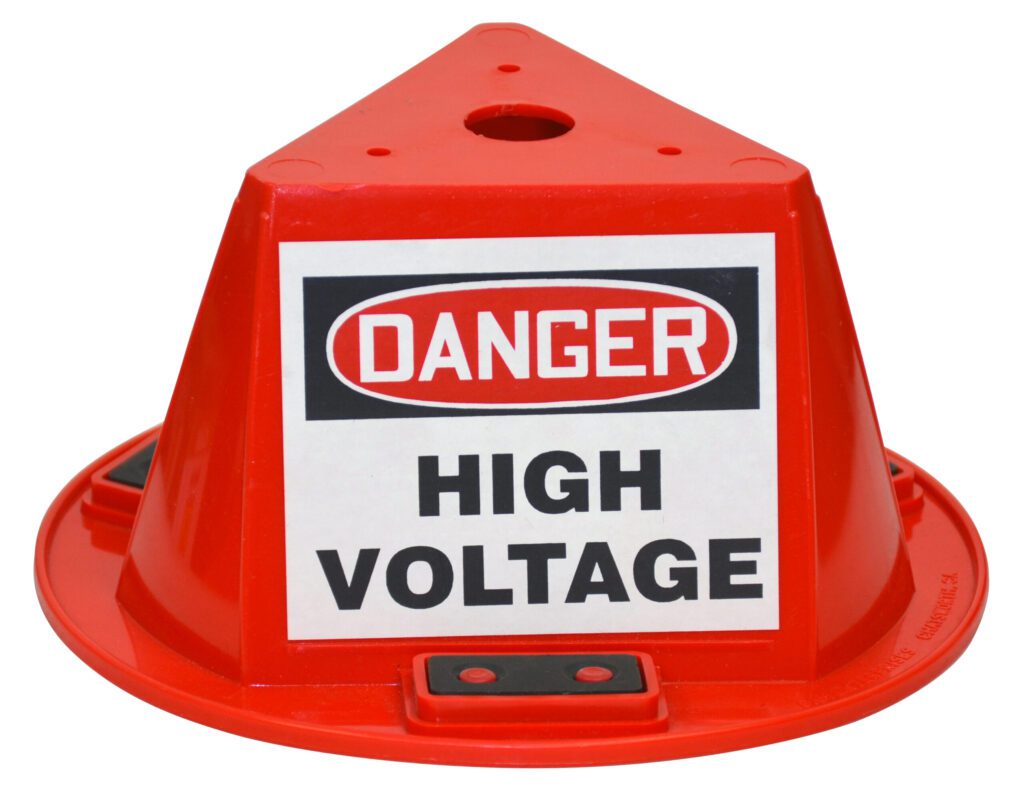
JohnDow’s Electric Vehicle Service Area Barricade Kit and EV Safety Cone Package create this perimeter clearly to others in the shop. The Magnetic Car Toppers attach directly to the vehicle’s roof to visibly identify it as an EV under active service – a simple signal that prevents the single most common cause of shop incidents: uninformed staff walking into a live work zone.
Category 5: The All-in-One Starting Point
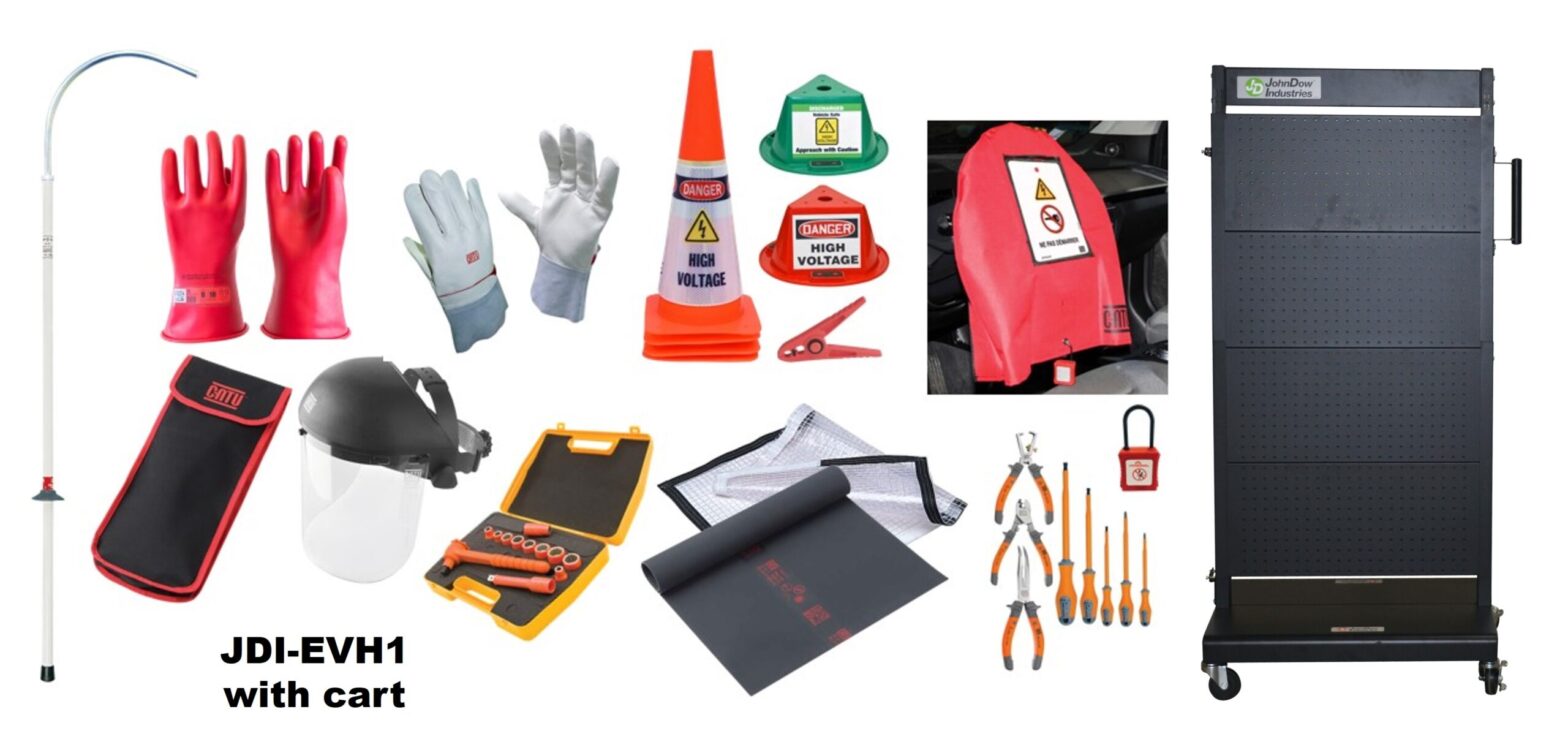
For shops equipping an EV bay from scratch, JohnDow’s EV/Hybrid Safety Package bundles the core items into a single purchase: insulating gloves, overgloves, rescue stick, insulating blanket, safety cones, and more. It is not a complete replacement for building out your full equipment list above, but it is the fastest way to meet baseline safety requirements while you source the remaining items.
A Mobile Tool Cart from JohnDow keeps all EV-specific safety equipment organized, portable, and separated from standard ICE tools. Dedicated storage is not optional – it is a safety protocol. Mixed tool sets are how insulated tools end up next to uninsulated ones, and how the wrong tool reaches the wrong component.
Putting It All Together: The Pre-Service EV Safety Checklist
Before any technician opens a panel or touches an orange cable, run through this sequence:
Vehicle Identification and Area Setup
- Confirm the vehicle is an EV or hybrid before beginning service
- Place Magnetic Car Toppers on the vehicle roof
- Deploy EV Safety Cones and Barricade Kit around the work area
Technician PPE
- Undergloves on
- Class 0 Insulating Gloves – pneumatic-tested for pinholes, clean and dry
- Overgloves on
- Arc Flash Face Shield in place
- Insulating Apron secured
- Insulating Overboots or EH-rated footwear confirmed
High-Voltage System Control
- Key fob removed and stored away from the vehicle
- High-voltage service disconnect removed and padlocked with Nylon Safety Padlock
- Locking Steering Wheel Cover installed
- Wait the manufacturer-specified discharge time (typically 10–15 minutes)
- Confirm de-energization using a CAT III-rated multimeter
Workspace Preparation
- Insulating Mat placed under technician’s position
- Insulating Caps on exposed terminals
- Insulating Blankets covering adjacent live or recently-live components
- Rescue Stick positioned and accessible within the work area
- Vehicle Fire Blanket accessible within the bay
Confirm a second technician is present before touching any high-voltage component.
Get Your Shop EV-Ready
Every month that passes without the right EV safety equipment is a month your shop is absorbing risk of serious injury or death, a liability it does not need to carry. The good news: equipping a bay properly is a one-time investment and protects your technicians, your shop’s reputation, and your ability to service this vehicle segment on the road.
JohnDow offers a complete line of EV and hybrid safety equipment from individual PPE components to the full EV/Hybrid Safety Package, built to meet ASTM, NFPA 70E, and ASE xEV standards.
Browse the full JohnDow EV Safety Equipment catalog or call 1-866-382-5057 to speak with a specialist about equipping your shop.
References
- ASE Electrified Propulsion Vehicles (xEV) High-Voltage Electrical Safety Standards – ase.com
- Massachusetts Department of Labor Standards, MassCAR High Voltage Safety with Hybrids and Electric Vehicles – mass.gov
- NFPA 70E: Standard for Electrical Safety in the Workplace – nfpa.org
- ASTM D120: Standard Specification for Rubber Insulating Gloves – astm.org
FAQ
- What voltage rating do EV safety gloves need to be for auto repair shops?
Class 0 insulating gloves rated for 1,000V AC / 1,500V DC are the minimum standard for EV and hybrid vehicle service. Most EVs today operate at 400–800V, so Class 0 provides the appropriate safety margin. Gloves must be pneumatically inspected before each use and formally electrically retested at least every six months under active service conditions per ASTM D120. A full three-layer system — undergloves, insulating gloves, and leather overgloves — is required to maintain protection against both voltage and physical damage.
- How often does EV safety equipment need to be inspected or replaced?
Insulating gloves require pneumatic testing before every use and formal electrical retesting every six months in active service. Insulating blankets, mats, and overboots should be visually inspected before each use for cuts, cracks, or contamination. Hard goods such as rescue sticks, arc flash jackets, and face shields should be inspected quarterly and replaced immediately if physically damaged. Maintaining a written inspection log for all EV safety equipment is a recognized best practice under both NFPA 70E and ASE xEV standards.
- Do I need different safety equipment for hybrid vehicles versus fully electric vehicles?
The core PPE requirements are the same because both platforms use high-voltage battery systems operating in overlapping voltage ranges. The primary difference is procedural — hybrids combine a high-voltage system with a conventional 12V system, and the interaction between them requires careful reference to OEM service procedures. The same Class 0 gloves, insulating tools, lockout/tagout protocols, and workspace protection apply to both vehicle types.
- How many technicians need to be present when servicing an EV high-voltage system?
A minimum of two trained technicians should be present any time work is being performed on an EV high-voltage system. This requirement exists because if one technician contacts a live circuit, the second technician must be positioned and equipped to use a rescue stick to safely break contact without touching the affected person. A single technician working alone on a live high-voltage system has no safe recovery option in that scenario. - Can a standard automotive fire extinguisher handle an EV battery fire?
No. Lithium-ion battery fires involve thermal runaway — a self-sustaining chain reaction that standard extinguishers cannot reliably suppress. An EV vehicle fire blanket is designed to contain the fire, limit oxygen flow, and slow thermal runaway progression until emergency responders arrive. It is not a replacement for a fire suppression system, but it is a critical first-response tool that standard shop fire equipment cannot replicate for EV-specific incidents.