

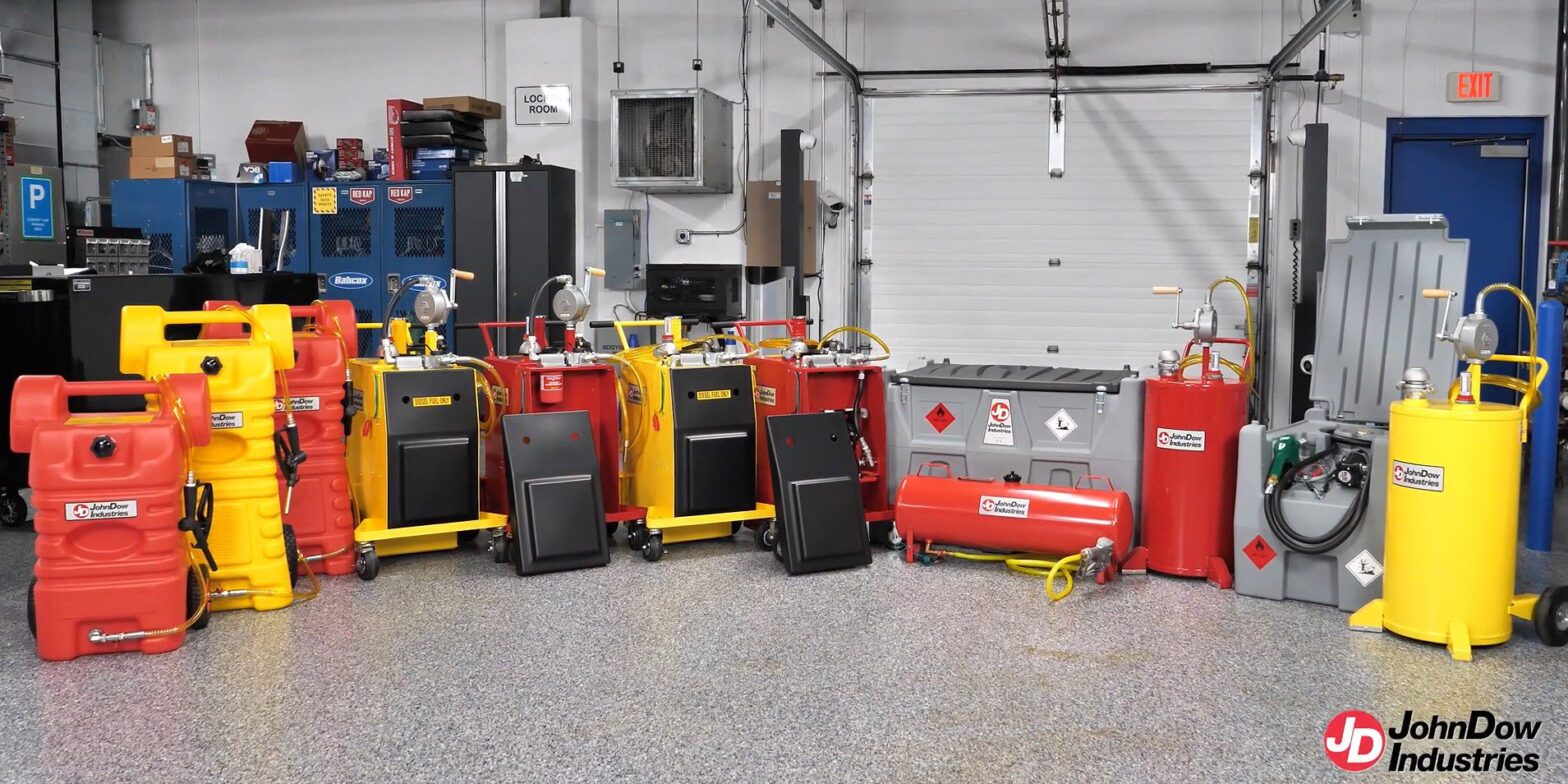
Most repair shops handle fluids all day. Oil changes, coolant work, brake service, transmission jobs, and power steering leaks, fluids show up everywhere. Even a “quick inspection” can turn into a drain-and-fill once you find contamination, signs of overheating, or a leak that can’t be ignored.
When fluid handling is slow or messy, the rest of the shop feels it. Bays stay occupied longer, techs lose minutes cleaning up spills or walking across the shop to get equipment. Waste fluid builds up in the wrong places. Over a week, those small delays add up to real lost capacity.
That’s why shop owners and lead techs start comparing portable vs centralized fluid evacuation systems. The question isn’t which one is “better” on paper. The real question is which one fits how your shop actually runs, your layout, your volume, and how your technicians move through the day.
This article explains what each system is, how each one works in real shop conditions, where shops usually gain (or lose) time, and how to decide.
Objective
Help shop owners and technicians choose between portable and centralized fluid evacuation systems by explaining how each works, what each is best for, and what to check in your shop before investing in a system.
Key Takeaways
- Both systems remove fluids faster and cleaner than basic draining when used correctly.
- Portable units win on flexibility, especially in smaller or changing layouts.
- Centralized systems win on consistency and speed in busy, multi-bay environments.
- The right choice depends more on shop volume and layout than on brand names.
- The best decision comes from watching your workflow for one week and choosing what reduces walking, waiting, and cleanup.
Table of Contents
- Why Fluid Handling Matters in Modern Shops
- What “Portable” Really Means in a Portable Fluid Evacuation System
- What “Centralized” Really Means in a Centralized Fluid Evacuation System
- Portable vs Centralized: A Practical Comparison That Actually Matters
- Cost, Space, and Workflow: What Changes in Real Life
- Which System Fits Which Type of Shop
- Common Mistakes Shops Make When Choosing
- A Simple Decision Framework You Can Use This Week
- FAQs
- Conclusion
1) Why Fluid Handling Matters in Modern Shops
Fluid work is not only about removing old oil. It affects safety, speed, cleanliness, and the smoothness of job transfers between vehicles.
If fluid handling isn’t controlled, problems usually don’t start big, they start small- a drain pan gets bumped, a hose drips while someone moves around a lift, or a tech pauses to wipe up oil before rolling their stool under the car. The bay stays messy longer than it should, and the next job waits. On a busy day, those interruptions show up as slower turnover and more frustration.
A proper fluid evacuation system helps reduce the “messy middle” of the job. Less spilling means less cleanup. Less carrying and pouring means fewer chances of slipping, spilling, or straining. And when waste fluid is handled consistently, the entire shop feels more organized.
So the real decision becomes: do you need flexibility more, or do you need flow more?
2) What “Portable” Really Means in a Portable Fluid Evacuation System
A portable fluid evacuation system is a mobile unit that rolls to the vehicle. Most setups include a wheeled tank, hoses, and fittings. A technician brings the unit to the bay, connects it to the vehicle’s fluid point, and pulls the fluid into the tank. Once the tank is full, it’s emptied into your waste storage setup.
In day-to-day use, portable systems feel simple because they don’t force the shop to change. You don’t need fixed lines. You don’t need construction work. You don’t need to redesign bays. You just place the unit where the work is and get on with the job.
Where portable systems shine is flexibility; if your shop layout changes, if you rent space, if you move equipment around, or if your jobs vary a lot, portability helps. A single unit can serve multiple bays and types of work without being “married” to a single location.
But portable does not mean perfect. Most portable systems run into two predictable issues in real shops:
First, the tank becomes a bottleneck when volume increases. Someone has to empty it, and that step usually happens at the worst time, when the shop is busy.
Second, the unit becomes a shared tool. In small shops, that’s fine. In growing shops, “Where’s the evac unit?” becomes a daily question. That’s not a deal breaker, but it is a real workflow cost.
Portable is a great fit when flexibility matters more than speed, and when you don’t have multiple techs competing for the same tool all day.
3) What “Centralized” Means in a Centralized Fluid Evacuation System
A centralized fluid evacuation system is built into the shop. Instead of rolling tanks around, you have fixed lines or piping, along with connection points at service bays. Technicians connect hoses at the bay, and the fluid moves through the fixed system to a central collection point.
This setup changes the daily feel of the shop. You’re not moving equipment in and out of bays. The floor stays clearer. Fluid handling becomes a repeatable step built into the bay itself.
Centralized systems are typically chosen by shops that do a lot of fluid work across multiple bays. If your shop has several techs working at once and you’re doing oil or other fluid services continuously, a centralized system often reduces the small delays that add up, walking, waiting for shared tools, and dealing with full tanks.
That said, centralized systems are not “install it and forget it.” They require planning; layout matters and connection points need to match how the bays are actually used. If the shop layout changes later, centralized systems are harder to adjust. And if an issue occurs in the line system, it can affect multiple bays.
Centralized works best when your shop runs on rhythm: steady volume, repeat services, and predictable bay usage.
4) Portable vs Centralized: A Practical Comparison That Actually Matters
Most comparisons focus on features. Shops should focus on what happens on a normal Tuesday.
Speed:
Portable systems can be fast for a single bay and a single technician. Centralized systems are usually faster across the whole shop when multiple bays are doing fluid work simultaneously, because no one is waiting for equipment.
Cleanliness and spill risk:
Portable systems reduce spills compared to basic draining, but they still involve moving a tank around and eventually emptying it. Centralized systems reduce floor clutter and reduce the amount of direct waste fluid handling in bays, often leading to fewer drip trails and fewer “oops” moments.
Control:
Portable systems depend on habits: where the unit is stored, who empties it, how it’s cleaned, and how hoses are managed. Centralized systems enforce more structure because connection points and waste flow are built into the shop.
Flexibility:
Portable wins. If you change layouts, add bays, rearrange equipment, or do a variety of work styles, portable adapts easily. Centralized systems are flexible only if they were planned with growth in mind.
If you want the simplest summary: portable gives freedom, centralized gives flow.
5) Cost, Space, and Workflow: What Changes in Real Life
This is where most shop owners get stuck because they want the “best” system. But “best” depends on what you’re trying to fix.
Cost
Portable setups usually cost less up front because they don’t require installation. Centralized setups often cost more because you’re paying for planning, installation, and a built-in system.
The hidden cost most shops miss is time. If portable equipment requires daily walking, searching, waiting, and frequent interruptions for emptying, those minutes add up to real labor costs over a month.
Space
Portable units take floor space and need a “home.” In tight shops, that matters more than people expect. If the unit ends up parked in the wrong place, it becomes one more obstacle around lifts and tool carts.
Centralized systems reduce floor clutter because the connection is at the bay. That doesn’t mean you magically gain space everywhere, but it usually makes bays feel cleaner and easier to move through.
Workflow
Workflow is the deciding factor.
If your shop has steady volume, multiple techs working at once, and fluid jobs happening throughout the day, centralized systems often smooth the work. Techs stay in their bays. They don’t lose momentum.
If your shop has fewer bays, mixed repair types, and a changing layout, portable systems often make more sense. You get the benefits of faster, cleaner fluid removal without locking your shop into a fixed design.
6) Which System Fits Which Type of Shop?
A good decision usually comes from two things: bay count and how often fluid work overlaps.
A portable fluid evacuation system is usually a better fit when:
- You have a smaller shop (often 1–4 bays).
- Fluid work is steady but not constant across multiple bays.
- Your layout changes, or you plan to move or expand soon.
- Flexibility matters more than rigid workflows.
A centralized fluid evacuation system is usually a better fit when:
- You run a larger shop (often 5+ bays).
- Several technicians are doing fluid services in parallel each day.
- You want to reduce floor clutter and tool-sharing conflicts.
- Your layout is stable, and you’re ready to plan around it.
One practical tip: if you’re adding a technician soon, re-check your decision. Many shops feel “fine” with portable systems until they grow. Growth is where waiting time shows up.
7) Common Mistakes Shops Make When Choosing
Most wrong purchases don’t happen because the equipment is bad. They happen because the shop didn’t match the system to daily reality.
Here are the mistakes that show up most often:
- Choosing centralized because it “looks professional,” even though the shop volume doesn’t justify it.
- Choosing portable for a busy multi-bay shop and then dealing with constant sharing, searching, and emptying interruptions.
- Not planning storage and cleaning for portable units, so hoses and tanks become cluttered.
- Not asking technicians how they move throughout a typical day or where the real efficiency gains lie.
- Ignoring growth plans. A system that fits today can become the wrong fit in six months.
If you want to avoid regret, don’t decide based on opinions. Decide based on observation.
8) A Simple Decision Framework You Can Use This Week
Watch your shop for one week and track three things:
- How many fluid jobs do you do per day (oil, coolant, transmission, brake fluid, etc)
- How often do techs walk away from the bay to get equipment or empty tanks
- How often do jobs slow down because of spills, cleanup, or shared-tool waiting
If you see frequent overlap, multiple bays doing fluid work at the same time, and technicians wasting time finding or waiting for equipment, centralized starts making more sense.
If fluid work is steady but not overlapping heavily, and your shop values flexibility, portable is usually the smarter move.
Some shops do both: a centralized setup for daily high-volume work and one portable unit for special jobs, overflow, or bays that don’t justify a fixed line. That hybrid approach can be a good stepping stone during growth.
FAQs
1) What are fluid evacuation systems used in auto repair shops?
They remove used fluids such as oil and coolant using suction, which reduces spills and often speeds up service compared to basic draining.
2) Is a portable fluid evacuation system good for small shops?
Yes. Portable systems are well-suited to small or mid-size shops when flexibility matters, and you don’t want major installation work.
3) When is a centralized fluid evacuation system worth it?
It’s typically worth it when a shop has steady, high-volume fluid service and multiple bays operating simultaneously, because it reduces waiting, walking, and clutter.
4) Do centralized systems reduce cleanup time?
They often do, because there’s less rolling equipment in the Bay Area and less handling of waste fluid, which can mean fewer spills and faster turnover.
5) Can a shop use both portable and centralized systems?
Yes. Some shops use a centralized system for routine daily work and keep a portable unit for special jobs or overflow.
Conclusion
Choosing between portable and centralized fluid evacuation systems is a workflow decision. Portable systems offer mobility and flexibility, making them ideal for smaller shops or changing layouts. Centralized systems support faster, cleaner, more consistent multi-bay operations when volume is high, and the shop runs on a repeatable rhythm.
If you want the right answer for your shop, don’t guess. Watch your bays for a week. Track how many fluid jobs you do, how often techs walk away from work, and where cleanup slows the day down. Then pick the system that removes those friction points. When fluid handling gets easier, the whole shop runs better, without pushing techs to rush.For shops ready to upgrade their fluid handling process, JohnDow Industries offers both portable and centralized evacuation solutions built for durability, efficiency, and real-world shop demands.